No products in the cart.: TL0,00
Carob has been talked about again in recent years, but this isn’t a new craze; it always had a place in our kitchen. It simply fell out of favor for a while, and now it’s finding its value again. The real question is this: should you use carob as molasses, or as powder (flour)? Both come from the same fruit, but the results they give in the kitchen are completely different. I put it plainly: molasses means speed and practicality; powder means control and recipe command. Which one you choose depends on what you’re using it for.
In this article, I’m putting both forms on the table with traditional kitchen sense. When molasses is the better choice, when powder takes the lead, which recipe gives a cleaner result with which form, what to watch for when shopping, and how to keep portions under control. No exaggeration, no polishing—just the core of the matter.
First, the basics: What is carob, and why does it show up in two different forms?
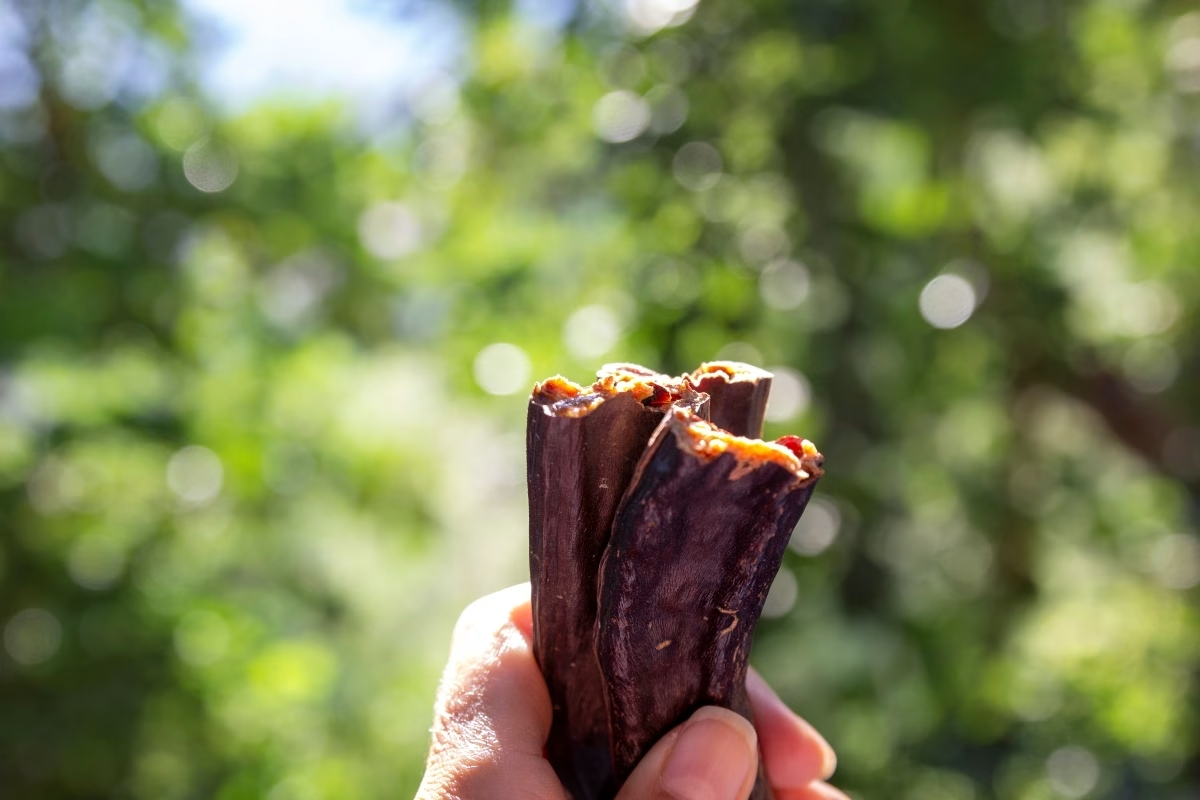
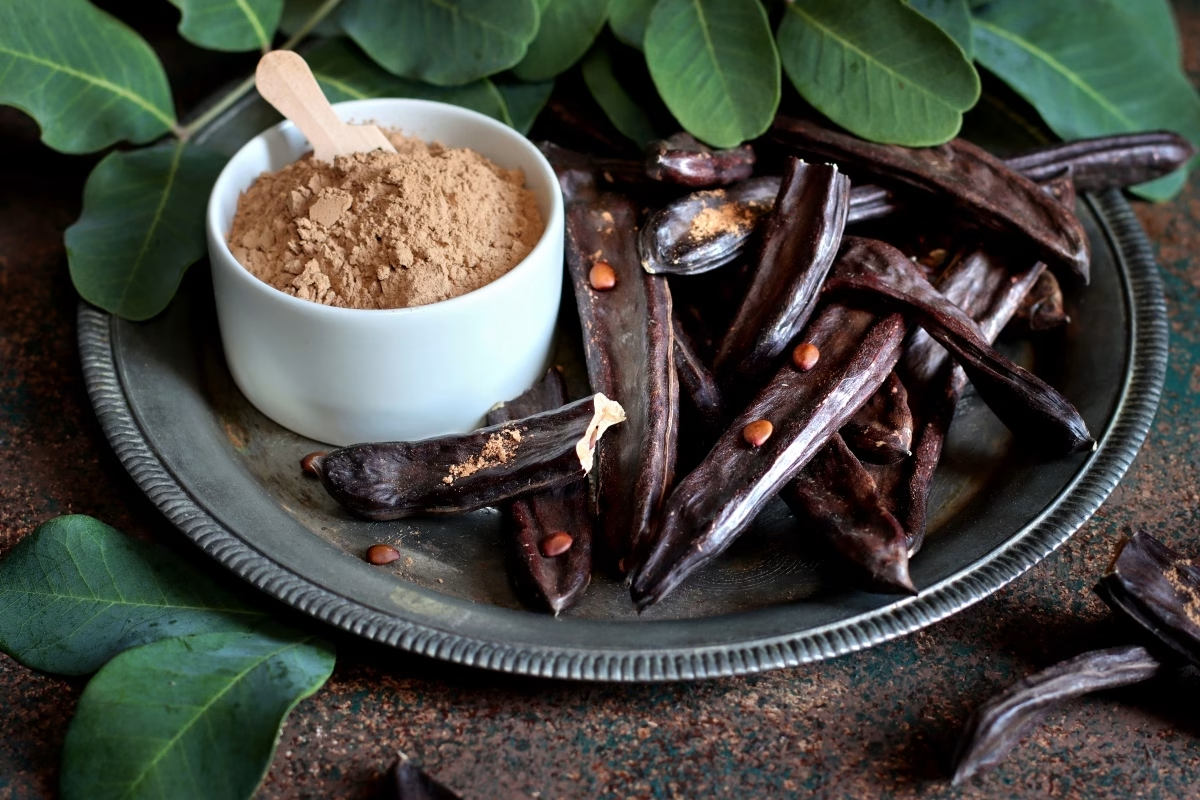
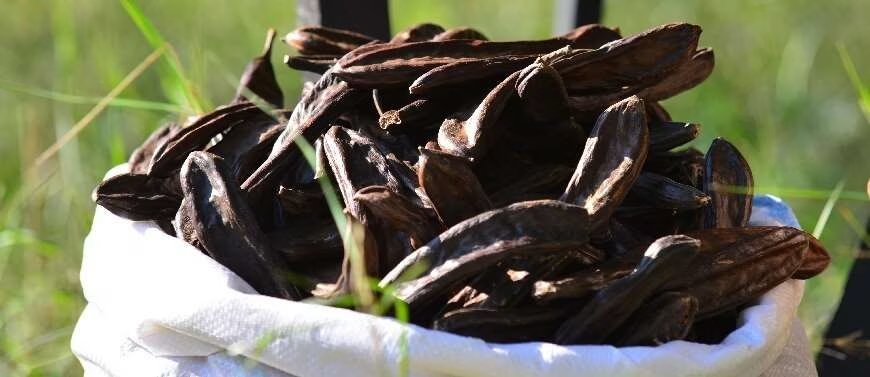
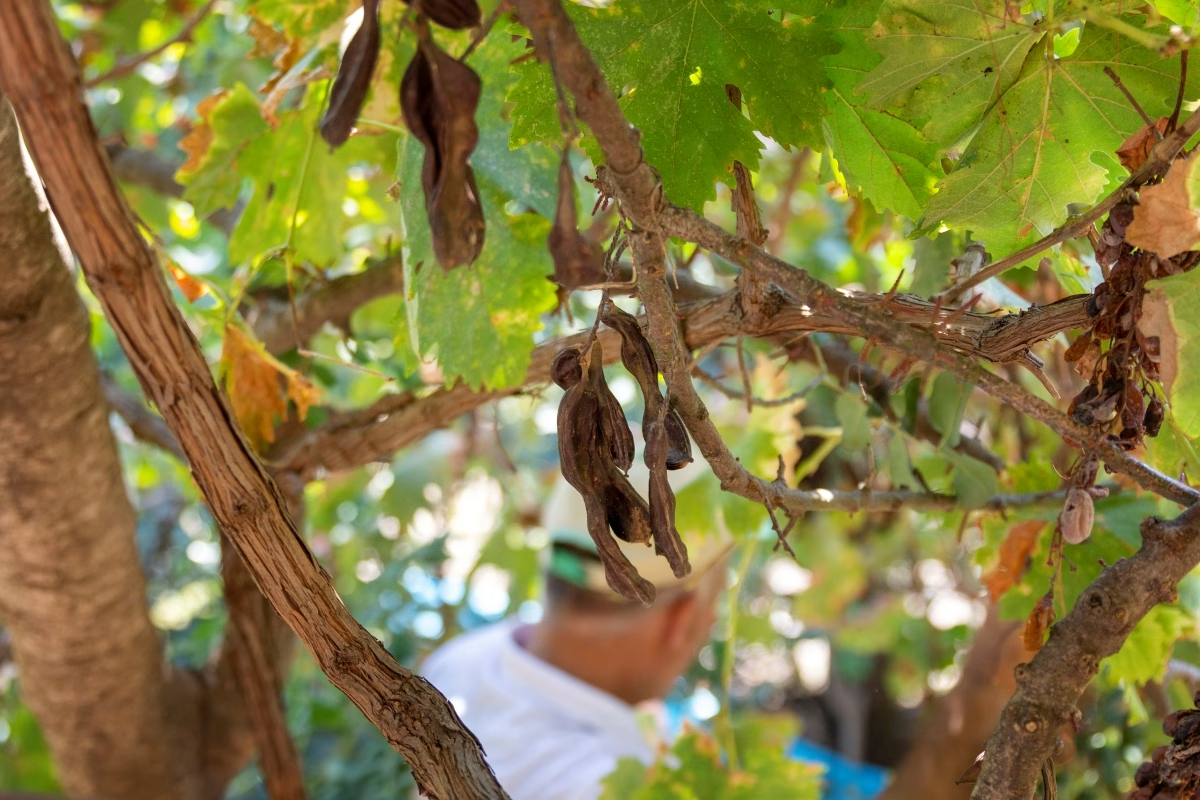
Carob (harnup) is the fruit of the carob tree grown in the Mediterranean climate. It has a hard shell, a naturally sweet pulp, and seeds. Its sweetness makes it usable as a natural sweetener in both traditional cooking and today’s recipes. From this come two main products: molasses and powder.
Molasses is a thick syrup obtained by extracting the fruit with water and boiling it down. Powder is made by drying and grinding the fruit. Even though they come from the same source, one is built on a concentrated liquid extract, the other on a dry, fiber-rich structure. That difference changes kitchen results from the ground up.
What kind of product is carob molasses?
Carob molasses makes itself known through its texture. Good molasses is thick and glossy (but not artificially shiny), with a distinct aroma and no burnt smell. Traditionally, molasses is paired with tahini at breakfast; in winter, it’s also diluted with hot water and drunk. This is a habit that didn’t appear for nothing: molasses provides quick energy, is easy to consume, and stores well for a long time without spoiling.
But let’s be clear about molasses: even if it’s natural, it carries high energy. Unmeasured use is not “support,” it’s excess. Our elders gave molasses with a spoon, not a ladle. If you lose this culture of measure, you don’t gain benefit—you take on a burden.
What kind of product is carob powder (flour)?
Carob powder is more for people who like working in the kitchen. Because powder goes into recipes: it mixes into batter, into yogurt, into drinks—meaning you control it. Compared to molasses, powder offers a drier, more fiber-rich structure. Its aroma is strong; thinking of it as cocoa is a mistake, but it does add a cocoa-like depth. It leaves a caramel-like, woody, full taste.
The biggest advantage of powder is this: you can manage sweetness and texture at the same time. When you add molasses, you also add liquid; when you add powder, you add dry matter and aroma. That’s a major advantage in recipes like cakes, cookies, pancakes, and energy bars.
Understanding the difference between molasses and powder at a glance
| Lens | Carob molasses | Carob powder |
|---|---|---|
| Texture | Thick liquid, syrup-like | Dry, ground, fiber-rich |
| Flavor | Quick sweetness, distinct aroma | More controlled sweetness, deep and full aroma |
| Kitchen impact | Adds liquid and sweetness | Adds aroma and dry matter |
| Where it’s strongest | Breakfast, quick mixes, hot drinks | Baked goods, yogurt mixes, sugar-reducing recipes |
| Portion control | Easy, but easy to overdo | More measurable, requires recipe discipline |
When is molasses the better choice?
Molasses takes the lead when you want speed and practicality. You’re rushing to work in the morning, breakfast is short, energy is low—tahini–molasses is the classic solution there. And it’s not a new invention; it’s a kitchen reflex built over years. Likewise, if you want quick energy before training, molasses is the more direct option, because the liquid form is easy to consume and can be used even without building a recipe.
Diluting it in hot water on cold days is also traditional. The aim isn’t to make a sweet drink; it’s to create a habit that warms you up and softens the throat. Molasses is more suitable here. With powder, issues like clumping or a powdery mouthfeel can show up more easily.
There’s also this: if you have children at home and want to manage sweet cravings more neatly, molasses can be a practical solution in small amounts. But measure is critical. Giving molasses without limits “as dessert” is not right. Small amount, right timing.
When is powder the better choice?
Powder takes the lead when you’re building recipes. You’re making cake, cookies, pancakes; you want to reduce sugar but keep the aroma strong. That’s where powder steps in. It gives batter a darker color and deeper aroma, and it doesn’t thin the recipe. When you add molasses, you must also adjust liquid ratios, and not everyone nails that balance every time.
In yogurt mixes, powder is usually more controlled. Molasses can thin yogurt—especially if you’re not using strained yogurt—so the texture drops fast. Powder adds body. After a few minutes of resting, the texture settles and you get a fuller mix.
Another area is homemade snacks: energy balls, bars, no-bake mixes. Powder works cleaner here because you choose the binder—dates, nut butter, honey. If you try to use molasses as the binder, the mix can become too sticky or the texture can be harder to control.
Which is better at breakfast?
For breakfast, I’ll be direct: molasses is more classic, more practical, and faster. The tahini pairing didn’t become a habit for nothing. If you have a breakfast routine with bread, tahini, walnuts, molasses sits comfortably there.
Powder shines more in yogurt-based breakfasts. If you’re making a bowl with yogurt, oats, fruit, and nuts, powder tends to be more balanced. If you add molasses, sweetness spikes quickly and the “sugar feel” hits sooner. Powder moves more calmly, spreads aroma, and leaves a fuller taste.
Which is better in baked goods?
In baked goods, powder is ahead. In recipes like cakes, cookies, and pancakes, powder is the safer choice because it’s less likely to throw off the structure. If you use molasses, you must consider liquid balance. A common mistake is this: people add molasses, the batter gets too runny, they add more flour, then the result turns dense—and they blame carob. That’s not carob. That’s unmeasured cooking.
With powder, you can keep the measure more clearly. Because the aroma is strong, you use a little; it changes the character of the recipe without flipping the structure upside down. That’s a serious advantage for anyone who wants consistency in the kitchen.
Hot drinks and cold mixes: which one is easier?
In hot drinks, molasses mixes more easily. It dilutes in hot water, milk, or plant-based milk with less clumping. Powder can also be used, but technique matters. If you throw powder straight into a hot liquid, clumps are likely. First you should loosen it with a small amount of warm liquid into a paste, then add it to the mix. Anyone who skips this detail ends up blaming powder unfairly.
In cold mixes, powder is often more advantageous. In smoothies, yogurt bowls, protein-based mixes, powder works with more control. Molasses also works, but the liquid sugar impact is felt more sharply. Powder gives a more balanced, slower-opening taste.
For someone who wants to reduce sugar, which is more suitable?
If the goal is reducing sugar, powder is usually the better road. Because powder doesn’t spike sweetness all at once; it mainly adds aroma and depth. Sweet cravings can often be managed through aroma. If you amplify aroma, the need for sugar drops. That’s kitchen craft—palate training, not just nutrition.
Molasses gives sweetness faster. Sometimes that’s an advantage, sometimes a disadvantage. It can stop a sweet craving quickly, but it’s also easy to overdo. Here, your self-control matters: if you can hold the measure, molasses is a good tool; if you can’t, powder forces more discipline.
Timing for athletes: molasses or powder?
For athletes, timing matters. If you want quick energy before training, molasses is more suitable because it’s easy and fast to consume. After training, the goal is recovery and building a balanced meal. If you’re making a yogurt-based bowl, powder sits better: it carries aroma and supports texture.
Let me also say this: a common mistake among athletes is always consuming “one spoon more.” Neither molasses nor powder is innocent in unlimited amounts. The aim is support, not burden. Amount matters as much as timing.
Children and family tables: which one offers safer use?
At family tables, molasses is easier to accept because it is more traditional and familiar. For children, mixing a small amount with tahini or stirring it into yogurt can be practical. But I’m repeating the “small amount” point on purpose.
Powder is more about feeding children through recipes. In pancakes, cakes, and cookies, powder works well to support aroma while reducing sugar. The child feels like they’re eating something sweet, but the sugar load stays more controlled. This isn’t “modern”—it’s actually old-school sense adapted to today.
How to think about it for people with stomach sensitivity
For people with stomach sensitivity, both forms can vary from person to person. Molasses is a dense, sweet syrup, so it can bother some. Powder, with its fiber-rich structure, may be better tolerated for some and worse for others. The best approach is this: start with a small amount, watch your body’s response, increase accordingly. Jumping in with a big portion and then complaining is a flawed method in both cooking and nutrition.
Time of day also makes a difference. Consuming a large amount of molasses on an empty stomach can bother some people. Taking powder with yogurt or oats tends to go more gently. These details look small, but in practice they make a big difference.
Quality matters: what to check when buying molasses, and what to check when buying powder?
With molasses, the most important point is a clean taste. A burnt, sharp, dull smell is not a good sign. Products that feel overly sticky, overly shiny, or like sugar syrup also require caution. Reading the label is essential. If there are items like added sugar, glucose syrup, or thickeners, the product may be called molasses, but its “spirit” has changed.
With powder, the key is freshness and grinding quality. Powder that is overly damp or clumpy may have been stored poorly. If it smells stale, the aroma is damaged. Its color is naturally deep brown; if it’s overly pale or overly black, production and raw material quality can be questioned. Working with a reliable producer is often the biggest difference-maker here.
Storage conditions: which lasts longer, molasses or powder?
Molasses, when stored correctly, is long-lasting. If kept in a cool, dark place with the lid closed cleanly, it won’t spoil easily. But simple mistakes—like dipping a wet spoon or letting water get into the jar—can ruin it. Hygiene is critical.
Powder spoils faster with moisture. It should be stored in a cool, dry place in a tightly sealed container. Steamy areas in the kitchen, cabinets above the stove, leaving it open on the counter—these can make the powder stale quickly. Half of the people who “can’t get results” from powder fail because they store it wrong.
The portion question: what balance should be set for daily use?
I’ll be direct here. Whether it’s molasses or powder, if you lose measure, the job falls apart. With molasses, starting with one teaspoon is usually the smart move. With powder, also one teaspoon, or a smaller amount depending on recipe volume. I’m not forcing gram-by-gram math on anyone; the kitchen can run on “eye measure” too. But eye measure is the measure of experience—not random guesswork.
Consuming molasses at every meal of the day is unnecessary for most people. Dumping powder into every recipe is also wrong. Carob is a supporting ingredient; if you treat it like the main ingredient, both flavor and balance break down.
Which form fits which goal better?
For quick and practical energy, molasses leads. For reducing sugar and increasing aroma, powder is the smarter choice. For baked goods and recipe control, powder is more stable. If you want a quick mix in drinks, molasses is easier; with the right technique, powder also works very well. At the family breakfast table, molasses is more traditional; for hidden, controlled use inside recipes, powder is more functional.
My approach is this: keep both at home. Use molasses for everyday practical needs, and powder for recipe work. Loading everything onto one product and expecting it to do every job is not a smart method—neither in the kitchen nor in the market.
Practical scenarios: examples that make daily decisions easier
If breakfast is short and rushed, tahini–molasses fits. If you’re making a yogurt bowl, powder gives a more controlled result. If you’re baking cake or cookies, powder is safer. If you want a drink with warm milk, molasses is less hassle. If you’re making snack bars at home, powder is an advantage because it carries aroma without wrecking texture.
All of these scenarios come down to one truth: use carob in the right place, and it shines; force it into the wrong place, and it dims. The product isn’t “bad”—the use becomes wrong.
Common mistakes
The most common mistake is consuming molasses without limits like sugar. The second mistake is using powder one-to-one in place of cocoa and expecting the same taste. Carob is not cocoa; it has its own character. The third mistake is storing powder incorrectly, losing aroma, and blaming the product. The fourth mistake is adding molasses, thinning the batter, adding more flour, then blaming carob when the result turns dense. Cut these mistakes out, and the product shows what it can do.
Carob molasses and carob powder are two faces of the same fruit. One is practical, one is controlled. One is the backbone of a traditional breakfast, the other is the strong aroma of modern recipes. Asking “which is better?” on its own is the wrong question. The right question is: what am I trying to make, and which form solves it cleanly?
My stance is clear: if you actually cook at home, use both. Use molasses in its place and with measure; use powder in balance and in the right recipe. That’s what our elders’ wisdom already said. We’re simply remembering it again.