No products in the cart.: TL0,00
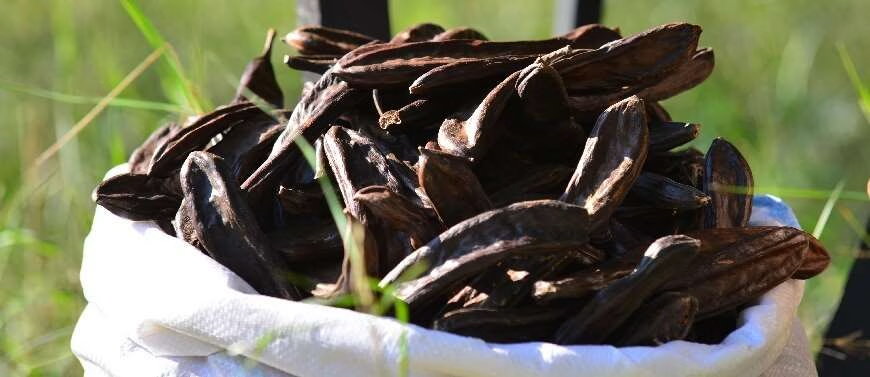
Carob has long been known in our kitchen as something that “gives strength.” Today, athletes turning to it may look like a “trend,” but the core reason is straightforward: carob provides practical energy, is easy to carry, fits into many recipes, and can help manage sweet cravings in a more controlled way. In other words, some of the qualities modern sports nutrition looks for were already present in old-school kitchen wisdom.
But we need to draw the line clearly from the start: carob is not medicine, and it is not a miracle performance booster. Energy and endurance are built through consistent training, enough sleep, the right carbohydrate–protein balance, and proper fluid and electrolyte management. Carob plays a “support” role within that system. Used in the right place, it can help; used in the wrong place and without control, it simply turns into an unnecessary sugar load.
Why do people who work out like carob?
One of the most sought-after things in sports nutrition is practical solutions before and after training. Carob is easy to consume quickly, especially in molasses form; and in powder form it can be used in recipes with better control. Also, because its aroma is strong, it can carry flavor in reduced-sugar recipes. These three points bring carob forward in sports: practicality, energy support, and recipe flexibility.
1) A practical answer to quick energy needs
Carob molasses, with its dense structure, can provide energy even in a small amount. That’s one reason people who say “I want energy without eating something heavy” like it before training. Especially for those who train in the morning, can’t do a long breakfast, or go to the gym after work, one or two teaspoons of molasses can be a practical support.
The critical point is this: molasses is fast energy, but because it’s easy to consume, the amount can easily get out of hand. Drinking molasses by the glass “because I do sports” is not smart. Performance won’t increase—only the sugar load will.
2) Carbohydrate support for endurance
In endurance sports (running, cycling, swimming, long training sessions), carbohydrate management matters. Carob can be considered a carbohydrate source thanks to its natural sweetness. A small amount before training can be useful; during training or right after, it can also be used with “carriers” like yogurt or oats as part of a recovery meal.
However, carob alone is not enough for endurance. In long workouts, without water, sodium, and electrolyte support, “energy” doesn’t function well either. Forgetting this reality is a common mistake among active people.
3) A “flavor carrier” in reduced-sugar recipes
Carob powder (flour) offers a real advantage in athlete-friendly recipes. It carries aroma in reduced-sugar cakes, pancakes, bars, and smoothie recipes. Many people want to “cut sweets” during a training phase, but the palate resists. Carob powder steps in here: it amplifies aroma and can help manage sweet cravings with less sugar.
The right approach is simple: don’t substitute carob for cocoa one-to-one and expect the same taste. Carob is not cocoa; it has a more caramel-like and woody character. Use it with its own identity, and the quality of the recipe improves.
4) Easy to carry and mix
Molasses form is especially convenient for people who want to “prepare at home and head out.” It can be carried in a small container, mixed into yogurt, or diluted with water. The powder form can also be added to smoothies, yogurt, or oats in a shaker. People who train like practical solutions—carob provides that practicality.
Before training or after? When does it make more sense?
The general logic is this: before training, the goal is “energy”; after training, the goal is “recovery.” Carob can be used in different ways in these two moments.
Before training
If you won’t be eating a full meal, a small amount of carob molasses can be practical. It can provide short-term energy support, especially for morning training. If you have a sensitive stomach, molasses on an empty stomach may bother some people. In that case, taking it with yogurt or a small snack is usually better tolerated.
After training
After training, the aim is to build a balanced meal that supports recovery. Adding carob powder to a base that includes protein and carbohydrates—such as yogurt, milk, or oats—can be a more controlled option. Molasses can also be added, but again, the measure matters.
Which sports use it more?
Carob shows up most often in endurance sports (running, cycling, trekking, swimming) and among people who do regular fitness training. Because these sports rely on practical pre-workout energy and post-workout recovery routines. Also, people with weight-control goals often use the powder form in recipes to manage sweet cravings.
Molasses or powder: which is more advantageous for athletes?
Let’s be clear:
Molasses provides faster energy and practical consumption. Small amounts before training are more common.
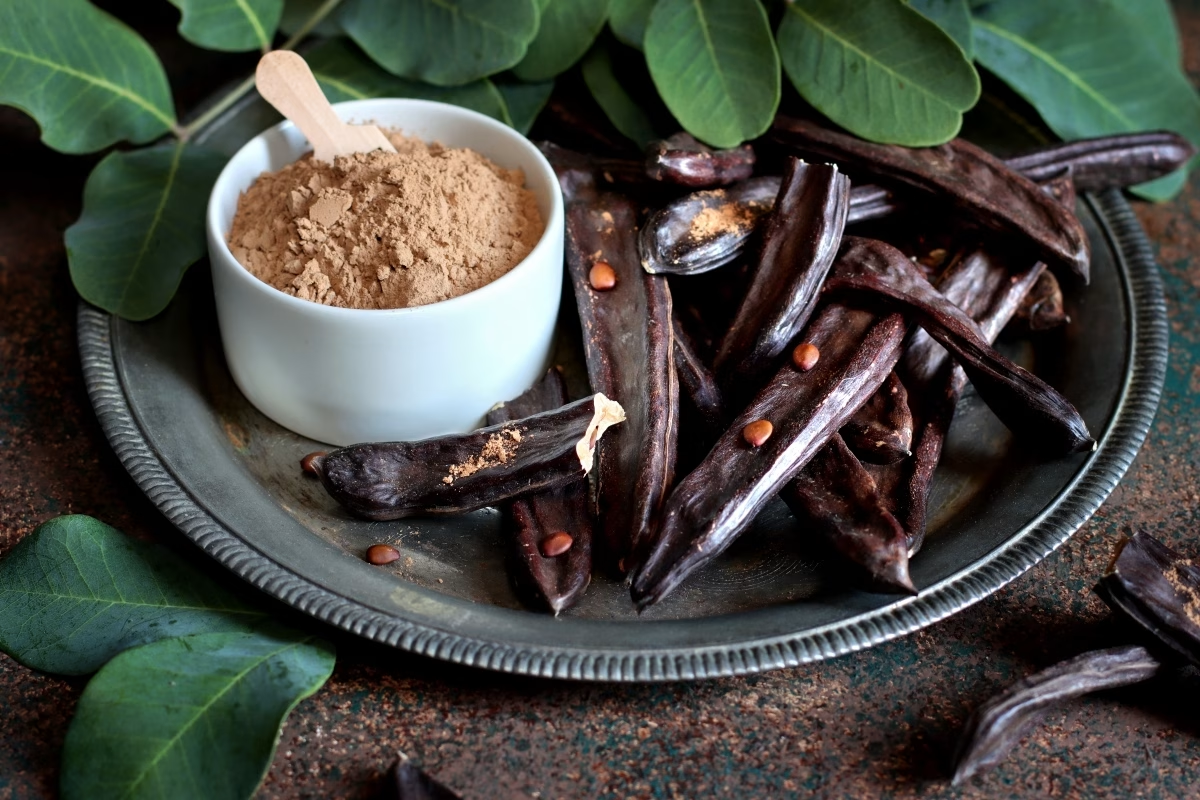
Powder is more controlled and recipe-focused. It works better for reducing sugar, for smoothie/yogurt/oats mixes, and in homemade bars.
My recommendation: if you train, keep both at home. Molasses is the “quick fix,” powder is the “disciplined fix.” But you will use both with control. Sport does not forgive excess.
Portion control and common mistakes
The biggest mistake is consuming carob without limits just because it’s “natural.” Molasses form, especially, is very easy to overdo because it’s consumed quickly. The powder form can also cause problems if you dump it into every recipe “because it’s beneficial”—taste suffers and digestive complaints may show up.
Another mistake is treating carob as an electrolyte replacement. In long workouts, you lose sodium through sweat. Carob does not replace that. Without enough water, sodium, and a proper recovery meal, you can’t solve the problem with molasses alone.
Another common error is ignoring quality. When buying molasses, choose products without added sugar or additives. When buying powder, stale or moisture-exposed products reduce aroma and may irritate the stomach.
Choosing quality products and storage
Molasses should have a clean aroma and should not smell burnt or overly sharp. If the label lists added sugar or syrup types, don’t fool yourself because it says “athlete product”: that is no longer “natural support,” it’s a sugar load. With the powder form, freshness and protection from moisture matter. Store it in a tightly sealed container in a cool, dry place.
People who train consume carob for energy and endurance because it’s practical, tasty, and—when used correctly—can support a nutrition routine. But the core truth is this: carob does not build performance on its own. Training, sleep, water, and the right macro balance build performance. Carob works if you place it correctly in that structure; if you place it carelessly, it becomes unnecessary load. Old wisdom applies here too: small, but right.