Why are carob seeds and carob flour referred to as “by-products”?
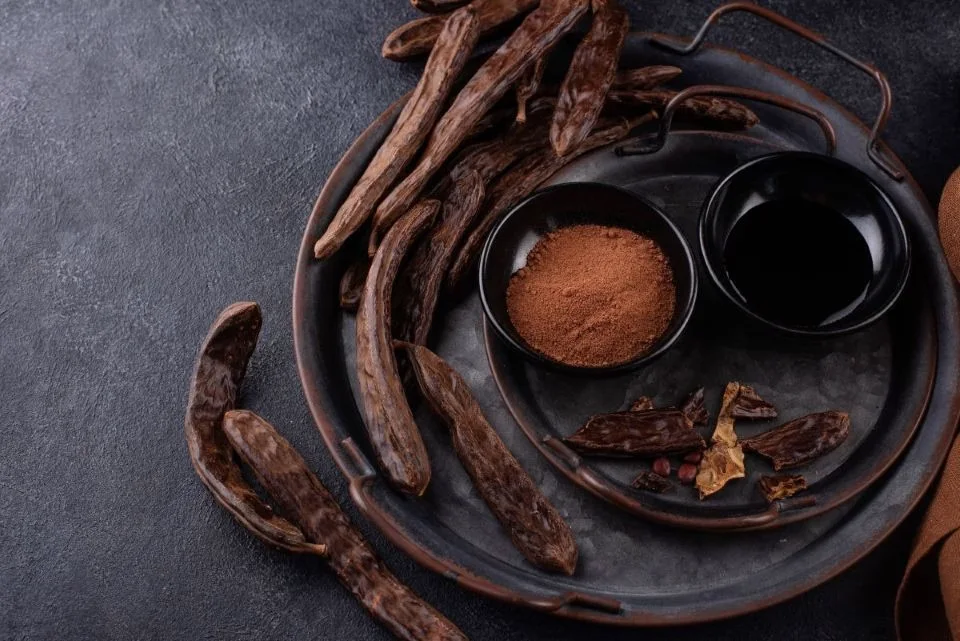
When most people hear “carob,” the first thing that comes to mind is molasses. That’s because it’s the most common and most visible product. But the value of carob is not limited to molasses alone. The seeds inside the pod and the flour (powder) obtained by grinding the fruit are also long-used but rarely discussed by-products. Calling them “by-products” does not mean they are worthless; they simply stay in the shadow because they are not marketed as much as the main product. Traditional kitchen logic is different: every part of the bounty is used. The same approach applies to carob.
What is a carob seed, and what is it used for?
Inside the carob pod there are small, hard seeds. These are not something you chew and eat directly; they are extremely hard and not suitable for teeth. The real value of the seed shows up in industry and food technology. The “seed gum” obtained from carob seeds (carob gum / locust bean gum) is a plant-based ingredient widely used as a thickener and stabilizer in foods. It’s commonly used to reduce crystallization in ice cream, achieve the right texture in sauces, and prevent separation in dairy products.
At this point, families often ask: “Is this a food additive?” Yes, technically it falls into the additive category, but its origin is plant-based, and when used correctly it is very common in food technology. In other words, what we call “carob seed” gains its value not through direct kitchen consumption, but in managing texture and stability in food.
Can carob seeds be used at home?
In a home kitchen, using the seed directly is not practical, because processing it requires equipment and technique. What usually happens at home is that the seeds are removed and discarded, or they are simply left in when the fruit is boiled together in traditional methods. However, the main value of the seed is, as mentioned, the industrial use of the gum derived from it.
That’s why you shouldn’t fall for shallow claims like “the seed is very beneficial.” Benefit comes from using the right product in the right form for the right purpose. The seed is not something you chew at home; you will break a tooth. That’s as clear as it gets.
What is carob flour (powder)?
Carob flour is a dark, aromatic powder made by drying and grinding the carob fruit. Some people call it “carob powder,” others “carob flour.” The idea is the same. Compared to molasses, it’s drier, more fiber-rich, and more “disciplined” in recipes because it allows better control.
What makes the flour form valuable is this: the sweetness doesn’t spike like sugar; instead, it amplifies aroma and leaves a fuller, more satisfying taste on the palate. That’s why people who want to reduce refined sugar often use carob flour in baked goods and yogurt-based mixes. And because it’s naturally dark, it also gives desserts an appetizing look.
What can you make with carob flour?
Carob flour works especially well in:
yogurt mixes, oatmeal bowls, smoothies, homemade bars and bites, baked goods like cakes and cookies, pancake and waffle batters.
The goal here isn’t “let me replace cocoa.” It’s to build a recipe around carob’s own character. It adds a cocoa-like depth, but anyone expecting a one-to-one cocoa substitute will be disappointed.
A small detail makes a big difference when using it in yogurt: after mixing, let it sit for 5–10 minutes. The flour settles, the aroma opens up more evenly, and the texture becomes richer and more filling.
Why is the difference between molasses and flour so important in the kitchen?
Carob molasses is liquid; it adds both sweetness and extra moisture to a recipe. So when you add molasses to a cake batter, you need to adjust the consistency. Carob flour, on the other hand, is a dry ingredient; it adds aroma and body but doesn’t disrupt texture the way molasses can. That’s why the flour form is often a “safer” choice in baking.
People with digestive sensitivity may also notice a difference. Because the flour is fiber-rich, it may cause gas for some. Molasses, due to its intense sweetness, may bother the stomach for others. So the choice is not only about taste, but also about tolerance.
Why does carob flour stand out in refined sugar–free recipes?
The biggest myth about refined sugar–free recipes is this: people assume that reducing sugar automatically reduces flavor. In reality, the secret is aroma. Carob flour amplifies aroma and can help create a “sweet impression with less sugar.” This way, you can balance the recipe using smaller amounts of sweeteners like honey, dates, or molasses. That approach is both traditional and practical.
What should you look for when buying?
When buying carob flour, staleness is the biggest enemy. A product that has absorbed moisture, clumped up, or lost its aroma won’t perform well. The color should be naturally dark brown; overly black, “burnt-like” tones or very pale tones may raise quality questions. Most important is the smell: you should get a clean, distinct, caramel-like carob aroma. If the smell feels dull or flat, the product is stale.
If you’re buying seed-based products (for example, carob gum / locust bean gum), choose food-grade products from reliable suppliers. These products require correct dosing. Using too much at home “just to thicken it” can ruin the texture.
How should it be stored?
Carob flour attracts moisture, and moisture ruins it. Store it in a tightly sealed jar in a cool, dry cupboard. Cabinets above the stove, humid spots, or leaving the bag open will kill the aroma quickly. Molasses should also be taken with a clean spoon and kept free from any water getting into the jar.
Why are these by-products valuable in traditional cooking?
Traditional cooking doesn’t tolerate waste. Taking only the juice of a fruit and throwing the rest away goes against old-school logic. Carob pulp, flour, and even the seed were used in one way or another. The reason we’re talking about this again today is that old wisdom still holds: know the ingredient, choose the right form, and use it in the right place. Carob seed is valuable in industry for texture control; carob flour is a strong helper in home cooking that reduces refined sugar and carries aroma, and when used in measured amounts, it genuinely elevates flavor.
In short, carob is not just molasses. The seed is a raw material with high technical value; the flour is a serious ingredient that empowers anyone building recipes at home, and when used properly, it grows the flavor. The point is not to treat the by-product as “secondary,” but to use it correctly where it belongs.